

Learn all the secrets of the Shincha Yakushima Yabukita
The Shincha Yakushima Yabukita is a delicious tea that’s first to be harvested in the spring of each year on the beautiful island of Yakushima
Taste
Discover the results of Nio Teas’ 4 step tea tasting method
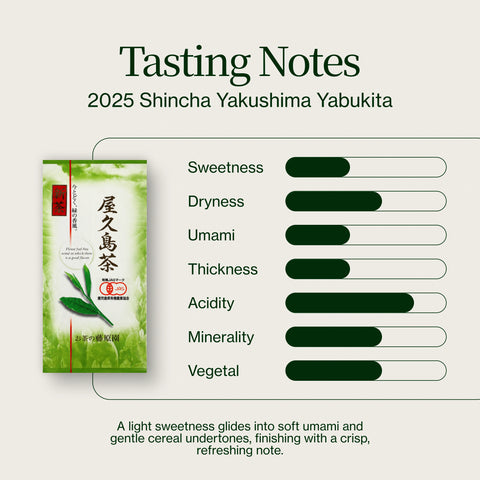
To evaluate the flavor of the Shincha Yakushima Yabukita we look for a combination of the aroma and also how the tea interacts with the palate. Does it produce a dryness, acidity, minerality, sweetness or umami? We’ll also evaluate the texture of the tea, otherwise known as mouthfeel. Finally, for sencha tea, we’ll evaluate it based on how vegetal the taste profile is as this is a common characteristic throughout most sencha teas.
Step 1 - Observing the Appearance
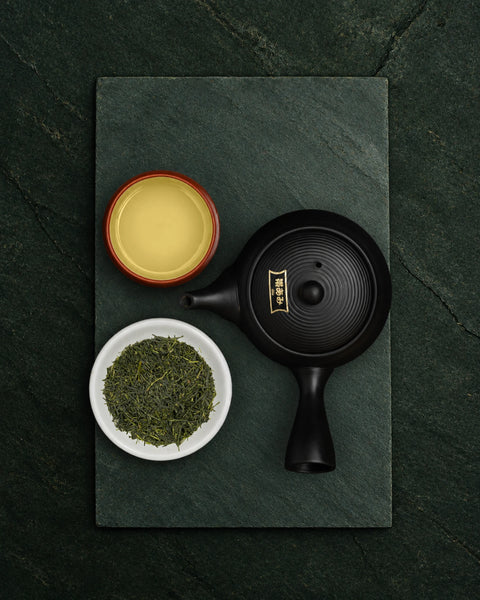
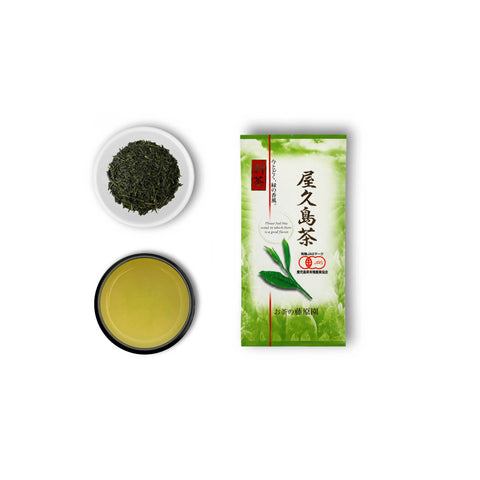
This is a japanese sencha green tea loose leaf and the leaves are on the lighter side, as the tea is unshaded and they are rolled into tight needle shapes with some smaller leaf particles.
Step 2 - Assessing the Aroma
The aroma coming off the sencha green tea loose leaf leaves is fresh and citrusy, with a tiny bit of these vegetal profiles
Step 3 - Tasting the Tea
This tea begins with a light sweetness which soon transitions into a soft umami. In the mid-palate, the tea begins to transition into these slightly starchy, cereal notes. The tea finishes off with a light freshness.
Step 4 - Evaluating the sensation on the palate
The structure of this sencha is well ordered, beginning with the sweetness that quenches the palate and later transitioning into some of the more complex taste notes. The finish leaves the palate with a cleansing and mouthwatering acidity.
100% Organically grown and Ethically Sourced
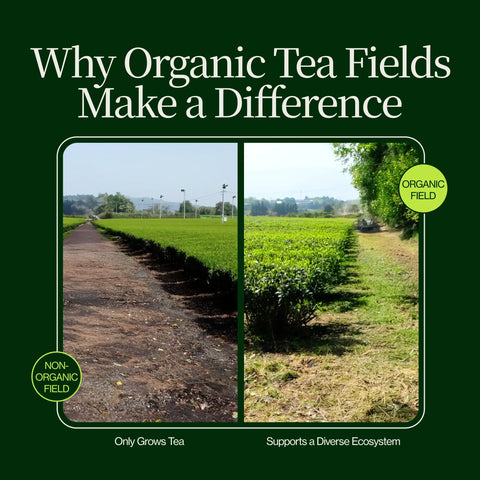
At Nio, we are proud to collaborate with tea farmers who share our commitment to organic farming practices and refrain from using harmful pesticides or chemicals. We firmly believe that this natural approach not only enhances the flavor of the tea but also promotes the sustainability and vitality of the tea fields.
Based on our experience, tea plantations that embrace organic farming techniques cultivate robust and healthy tea plants, while fostering a diverse ecosystem that supports a wide array of plant and animal species. We are dedicated to supporting environmentally-friendly and sustainable tea production methods, and we strive to bring the best quality teas to our valued customers.
Nio Teas Unique Organically grown sourcing process
We carefully conduct taste tests to identify the perfect flavor profile for each tea, ensuring that only the finest teas make it to our collection.
We communicate directly with tea farmers to gain insights into their organic and chemical-free farming practices, building strong relationships based on mutual respect
We visit tea fields in person to assess the quality of the plants and manufacturing facilities
We survey the surrounding ecosystem to ensure the preservation of the plant and wildlife species
JAS Certified
At Nio, we partner with tea farmers who prioritize pesticide and chemical-free farming practices. Some of our teas, such as the shincha yakushima yabukita, proudly display the JAS logo, indicating compliance with the strict Japanese Agriculture Standards. These standards strictly prohibit the use of pesticides and chemicals in tea cultivation.
For our larger partner farmers, we require them to obtain the JAS certification, which is achieved through comprehensive soil sampling and analysis. This ensures that their teas meet the highest standards of quality and sustainability.
We also understand that smaller tea farmers may have limited resources for soil testing. Therefore, we gladly accept their teas under the "pesticide-free" label, providing them with an opportunity to showcase their teas while upholding our commitment to sustainability and excellence.
How to prepare the tea
To prepare this Shincha Yakushima Yabukita, you can use a lower temperature water and a shorter brewing time. 1 minute should be the perfect brewing time to extract a delicious flavor from this green tea.
Step 1
First, heat the water to a temperature of 60 degrees Celsius or 140 degrees Fahrenheit, which is the perfect temperature for this Shincha Yakushima Yabukita
Step 2
Add 5 grams of the Shincha Yakushima Yabukita to your teapot and then you can pour in 150ml of the water you heated previously.
Step 3
Allow the tea leaves to sit in the water and brew undisturbed for 1 minute, which should be plenty of time for the tea leaves to open up and release their flavor into the water.
Step 4
After the brewing time is up, you can pour out your Shincha Yakushima Yabukita and the teapot will automatically sift out the leaves as you pour so they don’t end up in your cup. Enjoy your tea!
2nd brew
Don't throw the leaves after just one brewing! The Shincha Yakushima Yabukita can be brewed 2-3 more times before it loses flavor. To reinfuse the tea, you can pour additional hot water into the teapot and allow the leaves to sit and brew for 20 seconds.
Cold brew
We do not recommend cold brewing the Shincha Yakushima Yabukita
To brew up a delicious cup of this shincha yakushima, we recommend you invest in a kyusu teapot if you don’t have one already. The ideal teapot for this is the Fukamushi teapot, which has a circular metal filter that makes it easier to sift out the tea leaves as you pour.
Alternative without teaware
If you don’t have access to a teapot you don’t need to miss out on this tea! The next best thing is using a tea strainer to prepare your Shincha Yakushima Yabukita. This will not only separate the tea leaves out as you pour but also stop the infusion so the tea doesn’t brew for too long.
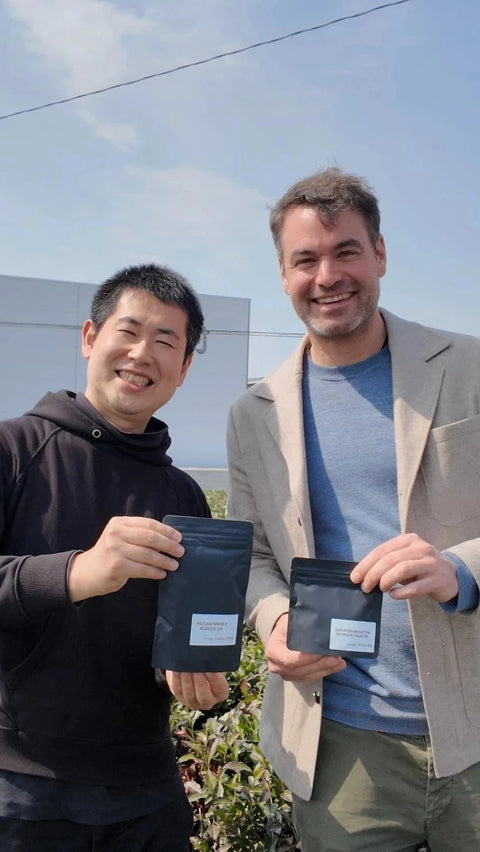
Nestled amidst the lush mountains, the Fujiwara family tends to a small tea garden where they handcraft the Shincha Yakushima Yabukita tea with love and care. Fujiwara-san's passion for organic tea cultivation has not only fulfilled his own dream of owning an organic tea garden but has also paved the way for pioneering work in organic farming practices in the region. It is truly a privilege to collaborate with such a dedicated and visionary farmer.
Sourced in Yakushima
Japan
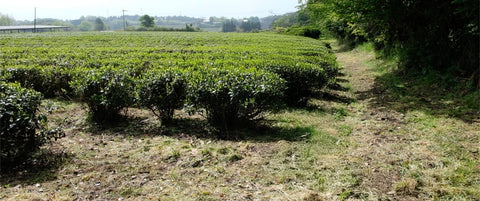
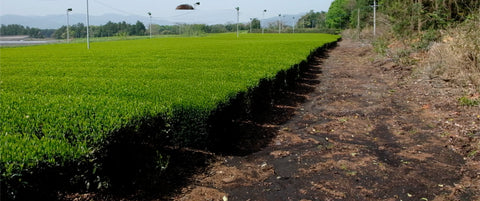
The Shincha Yakushima Yabukita tea is cultivated on the picturesque island of Yakushima, located in the southernmost part of Japan. This island is blessed with abundant rainfall, mountainous terrain, and a mild subtropical climate, creating ideal conditions for growing Japanese green tea. During our visit to Yakushima Island, we were captivated not only by the lush wildlife but also by the unwavering dedication of the local people to preserving it.
Cultivar and tea plant variety
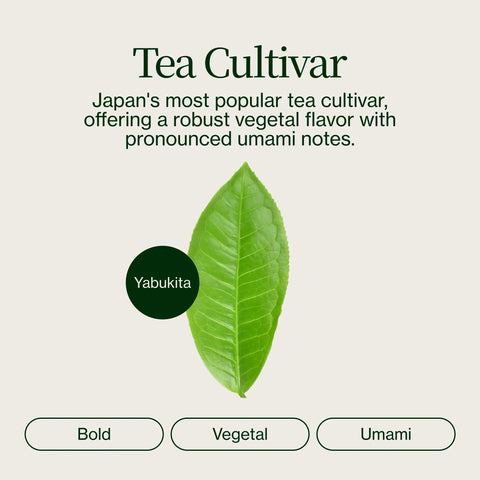
As the name would suggest, the Shincha Yakushima Yabukita is made from the Yabukita cultivar, the most common tea plant variety in Japan.
Yabukita
The yabukita is the most popular tea plant variety in Japan, making up 75% of the total tea production. Part of this is because of the flavor it produces. The Yabukita cultivar produces these strong, vegetal flavor profiles that a lot of tea drinkers appreciate, which contributes to its popularity.
Need help? We've Got You Covered...
Free Worldwide Shipping & Delivery
All orders qualify for free shipping, and we prioritize using the most cost-effective shipping carrier available for your country. Estimated shipping time is typically 5-7 days for customers in the U.S and E.U, and approximately 10 days for customers outside these regions. We also offer faster shipping options for an additional fee, depending on the country.
Order issues
If you encounter any issues with your order, please contact us immediately via email at info@nioteas.com, as this is the best platform for customer service inquiries. For quick questions, you may also reach out to us via direct message on Instagram at @nio_japanese_green_tea.
Payments
We accept all major credit cards, Paypal, and Apple Pay for payment. If you prefer to pay by bank transfer, simply select the option during checkout, and we will provide you with further details. Your order will be shipped once the payment has been successfully processed.
Returns & Refunds
Our goal is to ensure that every customer has a positive tea experience with Nio. If you are unsatisfied with the tea you receive, please let us know, and we would be happy to send you a replacement. Your satisfaction is our top priority.
I ordered three shinchas and this was by far my favorite. It's perfectly balanced and so easy drinking that I always want more. Also, the little quote on the packet makes me smile: "Please feel this wind in which there is a good flavor."
I hope this is available in 2025 . . .
When I opened the packet, I could smell the lovely fragrance. Absolutely love the biscuit notes and each sip ends with a little vegetal umami. I went on with this tea up to 5 steeps. Later steeps had so much sweetness and I love how refreshing it is.
Yakushima Yabukita ‘Shincha’ (新茶 or "new tea")
Tasting Notes: Classic Japanese Green Umami with notes of Buttered Brussel Sprouts, Seaweed Wrap, Cooked Rice, Sakura, and Steamed Milk with sweetness both in taste and aroma. Smooth, medium finish with a creamy texture, light and persistent dryness throughout, and a subtle astringency to ‘glue’ the shifting tone of salty to sweet. This Shincha held up extremely well to a high-heat sampling brewed with cooled down boiled water (200-205) for 1 min, 3.5 grams but I’ve done this only for tasting purposes. The recommended temperature for this tea would vary from as low as 140 to as high as 185, and I’ve always found the leaf ratio for Japanese greens to be much more idiosyncratic to the particular individual but the starting ratio I’d recommend is 3.5 grams per 100ml Gongfu, or 1.5-3 grams per 500-750 ml mug. This is a Japanese green which will have a radically different balance depending on whether you stick firmly to Western or Gongfu brewing instructions, moving closer to fresh vegetables and umami characteristics the closer you get to Gongfu. The liqueur colour is toned from a Sencha which is expected of this type, and has a more reserved, clear pale green to yellow colour often associated more with Chinese greens while still carrying over the classic neon-green vibrancy you’d expect from most Japanese green teas in the cup. A solid, fresh, and accurate representation of a high-quality Japanese Tea. I’d recommend always straining Japanese Green Tea with a fine mesh strainer or using a mesh strainer Kyusu or raw Tokoname Clay Kyusu for the absolute best results.
I have been drinking tea from Nio for a little over one year and as time goes by am learning more and more about exactly how to properly brew each one for maximum flavor. This is one I enjoy more and more as time goes by.
The yakushima sencha has a balanced flavor that isn't too strong or too weak. It's a great option for someone who wants a classic green tea experience.
I found this sencha from Nio to be smooth and mellow. It doesn't have a strong aftertaste or overpowering flavor, making it a great option for someone who prefers subtle teas like me!
This sencha has a nice, clean taste that's perfect for sipping on a relaxing afternoon. The flavor is light but satisfying, without any harshness or bitterness.
The Yakushima sencha is an excellent choice for anyone who wants a straightforward Japanese green tea experience. It has a simple taste that's easy to enjoy without any fuss.

Chun mee vs sencha compared side by side in terms of flavor, processing, brewing, and overall drinking experience so you can pick the right tea for you.
Looking for the best sencha green tea? Compare top picks, flavor profiles, and brewing styles to find the perfect Japanese green tea for your daily routine