

Una tokoname kyusu es una tetera tradicional japonesa con asa lateral, hecha de arcilla Tokoname rica en hierro, diseñada específicamente para preparar té verde con resultados más suaves y menos astringentes.
La mayoría de las teteras son recipientes pasivos. Esta, en cambio, participa activamente en la infusión, gracias a su arcilla rica en hierro que interactúa químicamente con los taninos del té para producir una taza más suave y redonda.
Es la tetera preferida por los bebedores sencha y gyokuro en todo Japón, y la recomendada por los instructores profesionales de té japoneses para la preparación diaria y funcional.
Este artículo explica qué efecto tiene la arcilla Tokoname en el té, cómo funciona el filtro de cerámica y en qué fijarse al elegir la pieza adecuada.
¡Empecemos!
Tokoname Kyusu 101 - Visita a una fábrica de teteras en Japón
Una tetera japonesa hecha de arcilla rica en hierro.

Una tokoname kyusu es una tetera japonesa con asa lateral, hecha de arcilla rica en hierro procedente de la ciudad Tokoname , en la prefectura Aichi , que interactúa con el té para reducir el amargor percibido y producir una taza más suave y equilibrada.
El mango se extiende en un ángulo de 90 grados desde el cuerpo, lo que permite un vertido preciso controlado por la muñeca, ideal para múltiples infusiones cortas.
El resultado es una taza notablemente menos amarga y más equilibrada que el mismo té preparado en vidrio o cerámica esmaltada, especialmente en el caso sencha y gyokuro , donde el equilibrio de los taninos determina la experiencia de degustación.
La cerámica Tokoname y su historia en la cultura del té japonesa.
Tokoname es una de las seis ciudades alfareras de Japón conocidas como "Hornos Antiguos", con tradiciones de elaboración de cerámica ininterrumpidas que se remontan al siglo XII, durante el período Heian, y la zona de mayor producción entre las seis.
La ciudad se convirtió en sinónimo de la producción kyusu porque su arcilla local resultó ser excepcionalmente adecuada para la infusión de té verde. Generaciones de alfareros perfeccionaron este descubrimiento, compitiendo y compartiendo técnicas hasta que el estilo se convirtió en el referente de la artesanía funcional de teteras.
Hoy en día, Tokoname sigue siendo una ciudad dedicada casi por completo a la fabricación de teteras. Algunos artesanos han dedicado toda su carrera a perfeccionar exclusivamente kyusu , optimizando la velocidad de vertido, el ajuste de la tapa y la construcción del filtro a lo largo de décadas de trabajo.
Por qué la arcilla Tokoname cambia el sabor de tu té.

La arcilla define la función práctica de una tetera japonesa tokoname kyusu . Comprender su efecto en el té explica por qué los conocedores buscan este estilo en lugar de conformarse con alternativas más sencillas.
Arcilla rica en hierro y su efecto en el sabor
La arcilla Tokoname contiene una alta concentración de óxido de hierro. Cuando el té caliente se infusiona en la tetera, el hierro reacciona con los taninos y reduce la astringencia percibida. El resultado es una taza de sabor más suave que conserva el carácter fresco y herbáceo característico del sencha de calidad.
Este efecto es medible, no imaginario. Las comparaciones directas con el mismo té preparado en vaso muestran consistentemente una diferencia en el amargor. Para los tés que se vuelven ásperos cuando la temperatura del agua no es la adecuada, la arcilla proporciona una corrección natural.
Con el tiempo, los aceites del té absorbidos forman una pátina en la superficie interior, un proceso que los alfareros japoneses denominan narawashi. A medida que se desarrolla este proceso de curado, la tetera realza gradualmente el sabor de los tés que se preparan en ella.
Por qué son importantes los interiores sin acristalar
El interior esmaltado crea una barrera entre el té y la arcilla, lo cual resulta útil al alternar entre tés muy diferentes. Sin embargo, elimina la interacción mineral que confiere valor a la arcilla Tokoname .
La superficie sin esmaltar es ligeramente porosa y absorbe los compuestos del té con cada uso. Por esta razón, muchos bebedores dedican una tetera kyusu tokoname a un solo tipo de té. Usar una tetera sencha para hojicha tostado puede transferir sabores con el tiempo. Sin embargo, vale la pena si se prepara el mismo té de forma constante.
Qué buscar al comprar un Tokoname Kyusu japonés

La mayoría de los compradores se enfrentan a dos decisiones fundamentales: el tamaño y el tipo de filtro. Ambas influyen en cómo se prepara el té y qué tipos de té son los más adecuados para cada cafetera.
Control de tamaño, forma y vertido
Las piezas estándar varían de 200 ml a 400 ml. Una tetera de 200-250 ml es ideal para preparar té individualmente con varias infusiones. Una tetera de 300-360 ml funciona bien para dos personas o tazas de tamaño occidental. Los volúmenes más pequeños se enfrían más rápido y permiten un mayor control de cada infusión, lo cual es especialmente importante para gyokuro , que es sensible a la temperatura.
Una pieza bien hecha tendrá un pico que se corta limpiamente al dejar de verter. El asa lateral hueca se mantiene lo suficientemente fría como para sujetarla cómodamente incluso cuando el recipiente contiene agua caliente, ya que no conduce el calor con la misma facilidad que un asa sólida.
Detalles del acabado de arcilla y la mano de obra
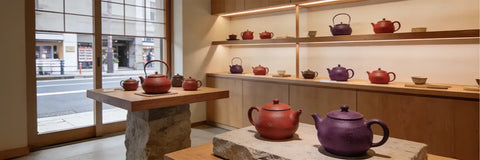
Estas teteras están disponibles en acabados rojo y negro. El rojo es el color natural de la arcilla shudei tras la cocción. Las piezas negras se obtienen mediante cocción reductora en un ambiente con bajo contenido de oxígeno, lo que produce una superficie más dura y densa y requiere un paso adicional en el horno, lo cual se refleja en su precio.
El ajuste de la tapa es uno de los indicadores de calidad más fiables. Una tapa bien hecha sella lo suficientemente bien como para que puedas inclinar la tetera al servir sin que se mueva. En el filtro, la construcción sasame con agujeros regulares y densos supera a los diseños simples de agujeros perforados para tés de partículas finas. Evita los insertos de metal en una tetera de barro, ya que indican un atajo en la fabricación. ¿Buscas un regalo para alguien que ama el té? Encuentra ideas seleccionadas en nuestra guía de 👉 Regalos para amantes del té .
Cómo cuidar correctamente un Kyusu de arcilla sin esmaltar

Nunca uses jabón en un kyusu sin esmaltar, y en cuanto a todo lo demás que necesitas para preparar bien el té, nuestra gama completa de utensilios y accesorios japoneses para el té te lo ofrece. La arcilla porosa lo absorbe permanentemente, lo que afecta a cada infusión posterior. Enjuaga con agua caliente inmediatamente después de cada uso y nada más.
Retire la tapa después de usarla y deje que la olla se seque completamente al aire antes de guardarla. Sellar una tapa húmeda retiene la humedad y favorece la aparición de moho. Para los primeros usos de una olla nueva, prepare una bancha económica para curar la arcilla antes de usar sus mejores hojas.
Si la olla adquiere sabores extraños con el tiempo, dejarla en remojo durante la noche en agua tibia con bicarbonato de sodio, seguido de un enjuague con vinagre blanco diluido, puede restaurar el color de la arcilla sin dejar residuos. Evite hervir agua directamente dentro de una olla fría; caliéntela gradualmente desde el exterior primero para evitar que se agriete.
Cuando la arcilla marca la mayor diferencia en la taza.
La diferencia entre preparar sencha en un vaso y hacerlo con un kyusu tokoname se hace más evidente con los tés de calidad media. sencha premium de primera cosecha se adapta bien a casi cualquier recipiente. Con el paso del tiempo, el sencha se vuelve ligeramente más astringente y menos equilibrado, mejorando notablemente cuando la arcilla actúa sobre sus taninos.
Si actualmente preparas té verde japonés en una tetera de vidrio, un infusor de metal o cerámica esmaltada, cambiar a una tetera Tokoname kyusu es el cambio de equipo que más impacto tendrá en el sabor de tu taza diaria.
Para quienes preparan té sencha o gyokuro con regularidad, combinar un té verde japonés de calidad con una tetera especializada de este tipo garantiza que tanto la hoja como el recipiente adecuados trabajen en perfecta armonía. Descubra la gama completa de teteras kyusu en Nio Teas para perfeccionar su experiencia de preparación.

Comentarios (0)
No hay comentarios todavía. Sé el primero en comentar.