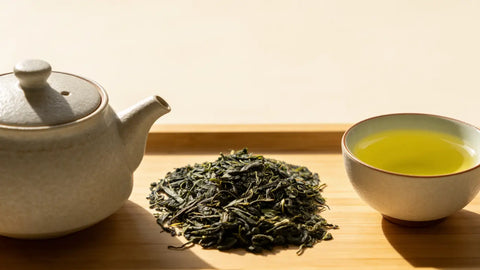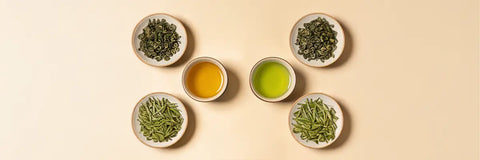
Tamaryokucha tea benefits include antioxidant support from catechins, calm, sustained energy from L-theanine and caffeine, and a smoother daily drinking experience thanks to its naturally sweet, low-astringency flavor profile.
It accounts for only around 3% of Japan's total tea production, which means most people outside the country have never encountered it.
The name translates literally to "curled green tea" in Japanese, a reference to the comma-shaped leaves that result from its unique processing method.
Its flavor profile leans toward sweet and fruity, with a smooth umami finish and far less grassy astringency than sencha, a distinction explored in depth in our tamaryokucha vs sencha comparison, which is exactly why it is such a practical daily choice.
Read on for a grounded look at the tamaryokucha tea benefits that matter most, what compounds deliver them, and how to brew this tea to get the best out of each cup.
Tamaryokucha Tea Benefits: Antioxidants, Calm Energy, and Daily Wellness Support

The tamaryokucha tea benefits come primarily from three categories of compounds: catechins (particularly EGCG), the amino acid L-theanine, and a range of vitamins, including vitamin C. These are the same core compounds that have made Japanese green tea the subject of decades of nutritional research.
Where tamaryokucha distinguishes itself is in its balance of L-theanine and catechins. Because the leaves are not shade-grown in the intensive way that gyokuro leaves are, the L-theanine content is moderate rather than exceptionally high. This places tamaryokucha comfortably between a high-catechin sencha and a high-theanine gyokuro in terms of its nutritional character.
For everyday drinkers, that balance is what makes this a genuinely practical tea. You get meaningful antioxidant and cognitive support without needing a tea that is engineered purely for maximum nutrient extraction.
The Compounds Behind the Benefits: What Tamaryokucha Actually Contains
Catechins and EGCG

Catechins are a class of plant polyphenols, and EGCG (epigallocatechin-3-gallate) is the most studied of the group. Because tamaryokucha is an unoxidized green tea, its catechin content is preserved in a way that oxidized teas like oolong or black tea simply cannot match.
Research published in the International Journal of Molecular Sciences confirmed that steamed Japanese green teas retain significantly higher catechin concentrations than pan-fired or oxidized varieties, with tamaryokucha specifically named among the catechin-rich options in the Japanese green tea family. EGCG has been studied in relation to cardiovascular health, metabolic function, and cellular protection against oxidative stress.
First-harvest, higher-grade tamaryokucha tea contains slightly less EGCG and more L-theanine, since L-theanine converts into catechins when leaves are exposed to sustained sunlight. The tamaryokucha tea benefits related to EGCG are therefore strongest in mid-grade or second-harvest leaves rather than the most premium single-cultivar selections.
L-Theanine and Amino Acids
L-theanine is the amino acid responsible for the smooth, umami-forward character of quality Japanese green teas. It also has a documented effect on the nervous system: it modulates the stimulant action of caffeine, reducing the jittery edge without suppressing alertness.
A 2020 review in the International Journal of Molecular Sciences found that L-theanine significantly improves cognitive function, mood, and concentration when combined with caffeine, and additionally supports a mild reduction in blood pressure. Tamaryokucha naturally contains both compounds, making it a functional beverage for people who want focused calm rather than the cortisol spike that often comes with coffee.
Beyond L-theanine, tamaryokucha also contains arginine and other free amino acids that contribute to its full, sweet flavor and support the tea's overall nutritional profile.
What These Tamaryokucha Benefits Mean in Practice
Calm, Sustained Energy Without the Jitters
Tamaryokucha contains caffeine at a level lower than coffee and roughly comparable to a standard sencha. The key difference is what happens alongside that caffeine: L-theanine slows absorption and smooths the stimulant arc, meaning the energy comes on gradually and does not end with a sharp crash.
People who switch from coffee to tamaryokucha often report the absence of mid-morning jitters and afternoon crashes as the most immediate change they notice. This particular tamaryokucha benefit is backed by multiple nutritional reviews documenting that the L-theanine and caffeine combination produces alert calm rather than the elevated cortisol response associated with high-caffeine beverages.
Antioxidant Support for Daily Wellness
EGCG and the broader catechin group in tamaryokucha function as antioxidants, neutralizing free radicals before they cause oxidative stress to cells. Oxidative stress is linked to a wide range of chronic conditions, which is why consistent, moderate intake of antioxidant-rich drinks is considered a meaningful part of a long-term wellness strategy.
Tamaryokucha also contains vitamin C, which steamed Japanese green teas retain well compared to pan-fired alternatives. This tamaryokucha benefit extends to immune function and collagen synthesis, adding another meaningful layer to the tea's nutritional contribution.
A Lighter Alternative to Sugary or High-Caffeine Drinks
Replacing a sugary drink or high-caffeine coffee with tamaryokucha removes empty calories, reduces total caffeine load, and introduces a daily dose of polyphenols and amino acids. This tamaryokucha benefit is most obvious to people who drink it in place of a mid-morning coffee and find they no longer need a second cup.
For people who find the grassy intensity of sencha difficult to drink unsweetened, tamaryokucha's naturally sweeter and fruitier character means it typically needs nothing added. That low barrier to consistent use is significant for anyone building a health-conscious daily routine. If you currently drink sencha and are curious how the two teas compare from a nutritional standpoint, we have covered it in full. 👉 Sencha Benefits According to a Green Tea Expert
How Tamaryokucha's Processing Shapes Its Nutrient Profile
Steamed Tamaryokucha vs Kamairi Tamaryokucha
Understanding how tamaryokucha is processed helps clarify which version aligns with the tamaryokucha tea benefits you are looking for. The steamed version, known as futsu-mushi, follows a path similar to sencha production. Steaming halts oxidation quickly and locks in a high concentration of chlorophyll, catechins, and vitamin C.
The second style is kamairi tamaryokucha, which is pan-fired in a rotating drum in a method closer to Chinese green tea production. From a nutritional standpoint, the steamed version retains more heat-sensitive vitamins and produces higher chlorophyll content, while the kamairi version develops nuttier flavor notes at the cost of some nutrient preservation. If you are drawn to the pan-fired style, our full guide to kamairicha covers its production, flavor, and how it compares to other Japanese greens. 👉 Kamairicha: a Japanese Take on Chinese Tea
Why the Curled Leaf Matters for Brewing
Tamaryokucha's distinctive curled leaves unfurl gradually during steeping, which affects how quickly compounds are released into the water. Unlike the flat needle-like leaves of sencha that release flavor quickly, tamaryokucha tends to be more forgiving over longer steeps and less likely to turn bitter if you slightly overshoot your timing.
This slower release also means tamaryokucha holds up well across multiple infusions. A single 5g serving can typically yield two to three good cups, allowing you to extract different compound layers from each brew. Our Japanese loose leaf tea collection includes tamaryokucha sourced directly from Kyushu producers who specialise in this variety.
Is Tamaryokucha Worth Drinking Every Day
For most people, yes. The tamaryokucha tea benefits are most consistent when the tea is consumed regularly rather than occasionally. One to two cups per day puts you well within a range where those benefits are fully accessible without approaching any threshold where caffeine becomes a concern.
The caveat, as with all caffeinated teas, is timing. Drinking tamaryokucha in the morning or early afternoon works well. An evening cup risks disrupting sleep, which can undo most of the wellness gains the tea provides during the day.
People with caffeine sensitivity, iron absorption concerns, or certain thyroid conditions should consult a healthcare professional before making any caffeinated tea a significant daily habit. For the majority of healthy adults, however, this tamaryokucha benefit profile stacks up well as a meaningful daily wellness contribution rather than something neutral.
Getting the Most from Tamaryokucha Tea

The single biggest factor in whether tamaryokucha tea benefits are fully realized is leaf quality. First-harvest tamaryokucha from established growing regions in Kyushu, particularly the Saga and Nagasaki prefectures, will consistently outperform commodity blends in terms of both flavor and amino acid content.
Water temperature has a more direct impact on tamaryokucha tea benefits than many people expect and our full tamaryokucha brewing guide covers exactly how to dial in each variable for the cup you want. At 80 degrees Celsius, catechins extract readily, and the cup will have more body and mild astringency. Drop to 70 degrees, and you shift extraction toward L-theanine and sweetness, producing a smoother, rounder cup. Understanding this gives you real control over what you are getting from each brew.
Tamaryokucha should be kept in an airtight container away from light, heat, and moisture. Once opened, consume within four to six weeks to preserve the chlorophyll brightness and the volatile aromatic compounds that make this tea's flavor so distinctive. If you are curious about how the tamaryokucha tea benefits compare across other Japanese green teas, our articles on gyokuro tea benefits and sencha cover those varieties with the same depth.